ERG Mode for Indoor Training: The Complete Guide
What Is ERG Mode?
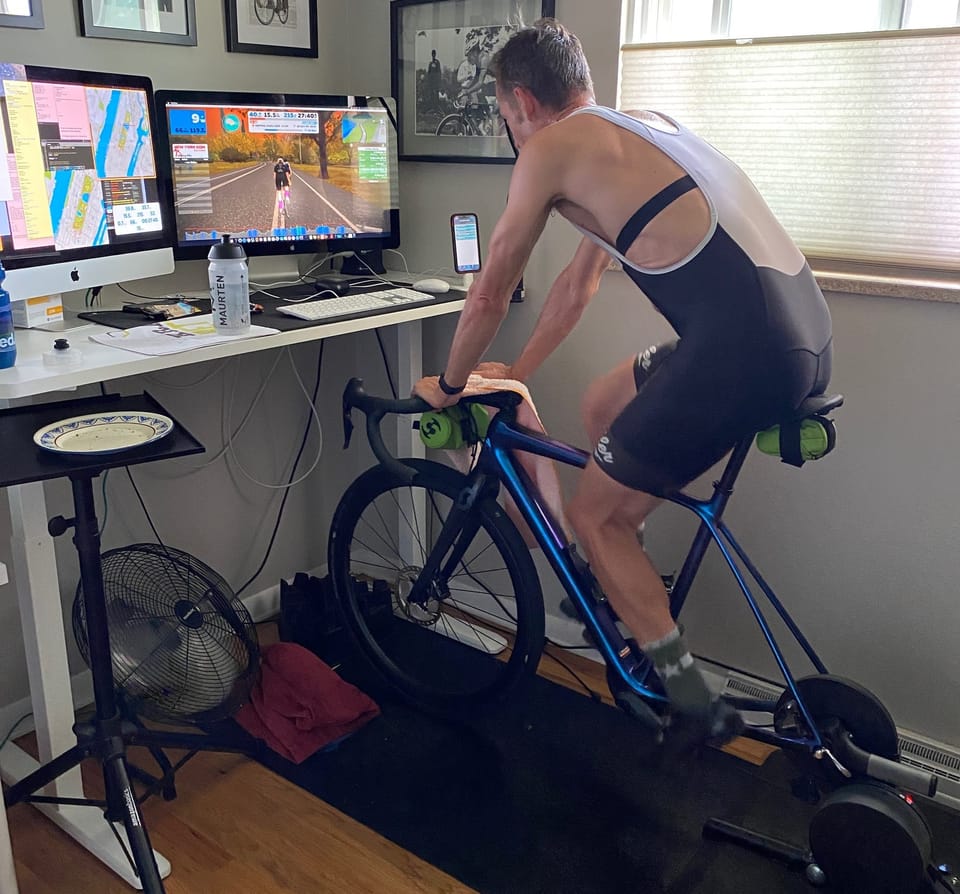
If you've spent any time on a smart trainer, you've probably encountered ERG mode — and either sworn by it or sworn at it. ERG mode (short for ergometer mode) is a feature on smart trainers that automatically adjusts resistance to maintain a specific power output, regardless of your cadence or gear selection. In plain terms: you set a wattage target, and the trainer holds you there.
Pedal faster? The trainer gets easier. Slow down? It gets harder. The goal is always the same number of watts.
This is fundamentally different from resistance mode or sim mode, where the trainer simulates a gradient or applies a fixed resistance level and your power output changes based on how hard you push.
Why ERG Mode Matters
ERG mode transforms your smart trainer from an expensive stationary bike into a precision training tool. Here's what it unlocks:
Exact workout execution. Structured training is built on hitting specific power targets — a 20-minute sweet spot interval at 88–93% of FTP, a 30-second sprint at 150% FTP. ERG mode removes the guesswork. You don't have to watch a power meter and manually adjust your effort. The trainer does it for you.
Mental freedom. When the machine holds the power, you can focus on breathing, form, and simply getting through the effort. There's a strange relief in surrendering control.
Consistent training data. Because your power output is tightly controlled, workout files are cleaner and more comparable over time. Tracking fitness progression becomes more reliable.
How to Use ERG Mode Effectively
Choose the Right Cadence
ERG mode works best when you maintain a consistent, reasonably high cadence — typically 85–100 RPM for most cyclists. Here's why: the trainer adjusts resistance based on your target power. If your cadence drops, resistance climbs to compensate. If it climbs too much, your legs slow further — a death spiral known as the ERG spiral of death.
To avoid this:
- Warm up properly before hitting hard intervals
- Resist the urge to shift gears excessively
- If you feel yourself slowing, consciously spin up your cadence before the resistance takes over
Pick a Moderate Gear
A common ERG mode mistake is using too large or too small a gear. Most experienced riders recommend a mid-range gear on both chainrings and cassette — something like the middle of your cassette on the small chainring. This gives the trainer a comfortable range to modulate resistance in both directions.
Very large gears (big ring, small cog) can cause the trainer to respond sluggishly. Very small gears can create overly twitchy resistance changes.
Use ERG Mode for Structured Work, Not All Riding
ERG mode is a tool, not a permanent state. It's ideal for:
- Threshold and sweet spot intervals
- VO2 max efforts
- Recovery rides at a prescribed wattage
- Any workout with defined power targets
It's less suited for:
- Cadence drills (where you want to vary effort)
- Free-form endurance rides
- Practicing race-specific pacing skills
For those sessions, switch to resistance or sim mode and ride by feel.
The ERG Spiral of Death — and How to Escape It
This is the most common ERG mode pitfall. It goes like this:
- You start an interval. It feels hard.
- Your legs slow slightly.
- The trainer increases resistance to maintain the target wattage.
- Your legs slow more.
- Resistance climbs further.
- You come to a grinding halt.
How to escape it in real time: Shift to an easier gear immediately. This is the ERG override — dropping gears reduces the physical load, letting you spin back up. Once your cadence recovers, the trainer will adjust, and you can shift back.
Long-term prevention: Keep your cadence high from the start of each interval. Don't let inertia build against you. Sprint into intervals if needed.
ERG Mode Workouts Worth Trying
Sweet Spot Intervals
- Format: 3–5 × 8–20 minutes at 88–93% FTP
- Rest: Equal or half the interval duration
- Why: Builds aerobic fitness efficiently with manageable suffering
VO2 Max Repeats
- Format: 5–8 × 3–5 minutes at 106–120% FTP
- Rest: Equal time recovery
- Why: Raises your aerobic ceiling; ERG mode helps nail precise supra-threshold power
Over-Unders
- Format: Alternating 2-minute blocks at 95% and 105% FTP, repeated 3–4 times
- Rest: 5–10 minutes between sets
- Why: Trains lactate clearance and teaches your body to recover while still pedaling hard
Active Recovery
- Format: 45–60 minutes at 50–60% FTP
- Why: ERG mode keeps you honest on easy days — prevents the common trap of riding recovery sessions too hard
ERG Mode vs. Resistance Mode: When to Use Each
| Situation | ERG Mode | Resistance/Sim Mode |
|---|---|---|
| Structured interval workout | ✅ Best choice | ❌ |
| Zwift race or group ride | ❌ | ✅ Best choice |
| Testing FTP | ❌ (can feel artificial) | ✅ Better |
| Long endurance ride | Optional | ✅ More natural |
| Sprint practice | ❌ | ✅ Best choice |
| Recovery ride | ✅ Great for pacing | ❌ |
A Note on Trainer Accuracy and Calibration
ERG mode is only as good as your trainer's calibration. Most smart trainers drift slightly as they warm up — meaning the resistance they apply early in a ride may not match what it applies 30 minutes in.
Best practice: Spin for 10–15 minutes before starting any structured ERG workout. Run your trainer's spindown or calibration routine (via Wahoo, Garmin, or your trainer's app) while the unit is warm. This ensures the wattage you see is the wattage you're actually producing.
Getting the Most from ERG Mode
ERG mode is a profound tool for indoor training, but like any tool, it works best when you understand its quirks. The riders who get the most from it are those who:
- Accept its constraints and work with the resistance rather than against it
- Use it purposefully for structured work and set it aside when flexibility matters
- Calibrate their trainer consistently
- Maintain cadence discipline
Once you internalize these habits, ERG mode stops feeling mechanical and starts feeling like having a coach set your effort for you — freeing you to simply ride.
Coming next...Why do coaches seem to hate ERG Mode so much?